
Love this? Pin it for later! 📌
There’s a certain kind of magic that happens when the first chill of autumn slips under the door and the daylight starts to fold in on itself earlier each evening. Suddenly the kitchen—my tiny, well-loved galley with the slightly crooked cabinet doors—feels like the only place I want to be. I pull out my thrifted enamel pot, the one with the tiny chip on the handle, and I start building what my family affectionately calls “the soup that pays the rent.” It’s humble, it’s inexpensive, and it tastes like I splurged on artisan everything. In reality, it’s a Budget-Friendly Creamy Tomato Basil Soup that costs less than a single café latte per serving and warms the house with the scent of summer gardens long after the vines have withered.
I first started making this soup during the year my husband was in graduate school and we were living on one very determined teacher’s salary. We’d just welcomed our second child, the furnace had developed a dramatic flair for quitting on the coldest night of the month, and the grocery budget shrank to whatever coins I could scoop from the jar on the dresser. One Wednesday—grocery day—I stood in the produce aisle clutching a dented can of whole tomatoes, a wilting bunch of basil marked down to 99¢, and a half-pint of heavy cream left over from a birthday cake that hadn’t quite worked out. The total came to $4.87. I remember because I had exactly five dollars in my pocket and a hungry baby on my hip. That night I blended those humble ingredients into something so luxuriously silky that my oldest—then four—asked if we were having “restaurant supper.” I’ve tweaked the method every winter since, but the heart of the recipe remains the same: pantry staples, a little ingenuity, and the belief that comfort shouldn’t hinge on a credit card.
Why This Recipe Works
- Pantry Heroes: Canned whole tomatoes, dried basil stems, and a lone carrot create depth—no fresh tomatoes required.
- Cream Without the Price Tag: A modest swirl of evaporated milk (or even blended rolled oats) gives velvet body for pennies.
- One-Pot Wonder: From sauté to purée, everything happens in the same pot—less dishes, less fuss.
- Freezer-Friendly: Make a double batch; it thaws like a dream on those nights when take-out feels inevitable.
- Customizable Consistency: Leave it chunky for a rustic vibe or blitz until glossy—your house, your rules.
- Kid-Approved Stealth Veg: That lone carrot and celery rib disappear into the crimson swirl—vegetable skeptics none the wiser.
- Aroma Therapy: Garlic, onion, and basil perfume the house faster than a candle and for a fraction of the cost.
Ingredients You'll Need
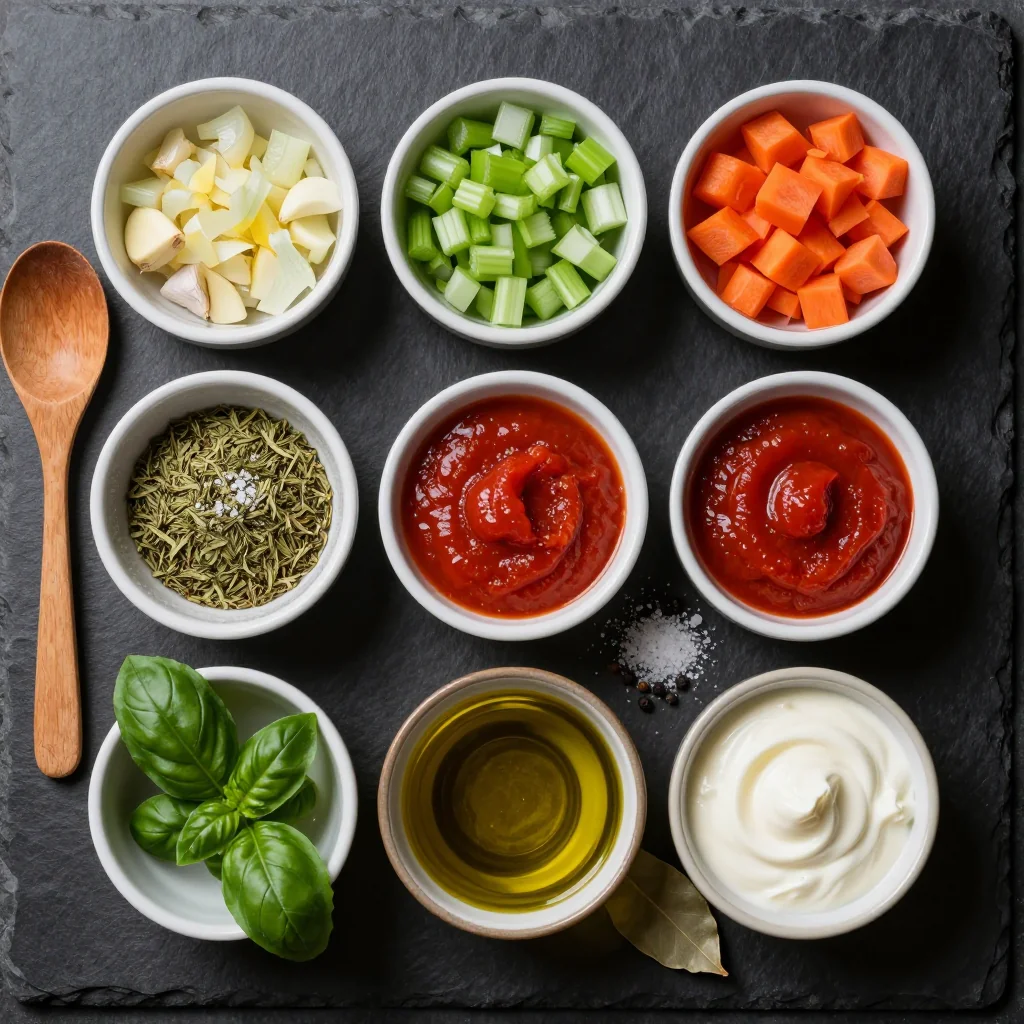
Great tomato soup begins with understanding the cast of characters. Below is the grocery list I still scribble on the back of envelopes, plus a few insider notes so you can shop like someone who’s feeding a family and a mortgage.
Canned Whole Tomatoes (28 oz): San Marzano-style are lovely, but any store-brand can labeled “in juice” works. Whole tomatoes break down silkier than pre-diced, and the juice in the can is pure gold—don’t you dare drain it. Look for cans without calcium chloride; it keeps the tomato firm, which is great for salsa, not for soup.
Onion (1 medium yellow): Yellow onions are cheaper than sweet and melt into jammy perfection once they meet butter. Dice small so they disappear into the soup—texture skeptics rejoice.
Carrot (1 medium): The quiet hero that tames acidity and adds body. If you only have baby carrots, toss in a dozen; no need to peel, just slice them in half lengthwise so they soften quickly.
Celery (1 rib): Optional but recommended. The leaves, tucked in the center of the stalk, carry the most flavor; chop those tiny and add them with the garlic.
Garlic (3 cloves): Smash, peel, mince. If your garlic has sprouted a green shoot, slice the clove in half and pluck it out—less bitterness.
Butter (2 Tbsp) OR Olive Oil (1 ½ Tbsp): Butter gives bistro richness; oil keeps it vegan. I’ve also made this with the leftover bacon fat from Saturday breakfast—decadent and economical.
Tomato Paste (2 Tbsp): Buy the tube if you can; it lives forever in the fridge and saves you from opening a whole can for two tablespoons. In a pinch, ketchup will work—just dial back the added sugar later.
All-Purpose Flour (2 Tbsp): The roux that thickens without cream. For gluten-free, substitute 1 Tbsp cornstarch whisked into 2 Tbsp cold water and add at the end.
Vegetable or Chicken Stock (3 cups): Use what you have. If you’re out, dissolve 1 ½ tsp bouillon in 3 cups hot water. Low-sodium lets you control the salt.
Dried Basil (1 tsp): Save the fresh basil for finishing; dried blooms in the sauté and gives that nostalgic “canned soup but better” vibe.
Sugar (1 tsp, optional): Taste your tomatoes first. If they’re tart like early-season fruit, a whisper of sugar balances. Honey works too.
Heavy Cream, Evaporated Milk, OR Plain Greek Yogurt (½ cup): Heavy cream is classic, but evaporated milk is half the price and still luscious. For a dairy-free route, soak ¼ cup rolled oats in ½ cup hot broth, then purée with the soup—it sounds odd, but you’ll swear there’s cream.
Fresh Basil (a generous handful): Shop the “oops we’re wilting” basket; as long as it’s not black and slimy, it will revive in ice water and still perfume the soup.
Salt & Pepper: Add salt in layers—onions, tomatoes, finish. Pepper waits until the end so it doesn’t turn bitter.
Optional Pantry Flair: A pinch of red-pepper flakes, a parmesan rind simmered with the soup, or a splash of balsamic vinegar for intrigue.
How to Make Budget-Friendly Creamy Tomato Basil Soup
Expert Tips
Low & Slow
A gentle simmer, not a rollicking boil, prevents the dairy from separating and keeps flavors bright.
Chill & Reheat
Cool leftovers in an ice bath before refrigerating; the soup thickens—thin with broth or milk when reheating.
Silkier Silk
For restaurant gloss, blend in 1 Tbsp butter off-heat—monter au beurre gives that sheen you thought required cream.
Bulk Buy
When tomatoes go on sale, buy a flat and roast them with oil and salt, then freeze in 2-cup bags for off-season soup.
Salt in Layers
Season the aromatics, then again after puréeing; tasting at each stage prevents over-salting and builds complexity.
Zero Waste
Parmesan rinds simmered with the soup add umami; collect them in a freezer bag and deploy like little flavor bombs.
Variations to Try
- Roasted Red Pepper Swirl: Blend in one drained roasted red pepper for smoky sweetness and a coral hue.
- Spicy Tomato Basil: Add ¼ tsp cayenne and a diced chipotle in adobo for a soup that hugs back with heat.
- Creamy Tomato Rice: Stir in ½ cup cooked white rice before puréeing; it thickens the soup and stretches servings.
- Vegan Luxe: Use olive oil, veggie stock, and coconut milk (the canned kind)—the faint coconut plays nicely with basil.
- Protein Boost: Purée in one can of cannellini beans for an extra 9 grams plant protein per serving.
Storage Tips
Refrigerator: Cool completely, transfer to airtight containers, and refrigerate up to 4 days. The soup will thicken; thin with broth, water, or milk when reheating.
Freezer: Ladle into quart-size freezer bags, label, and lay flat on a sheet pan until solid—then stack like soup books for up to 3 months. Thaw overnight in the fridge or defrost in a bowl of cold water for 30 minutes, then warm gently.
Make-Ahead Lunch Jars: Portion into 1-cup mason jars, leaving 1 inch headspace; freeze without lids. Once solid, screw on lids and tote to work; microwave 2 minutes with the lid ajar and stir halfway.
Frequently Asked Questions
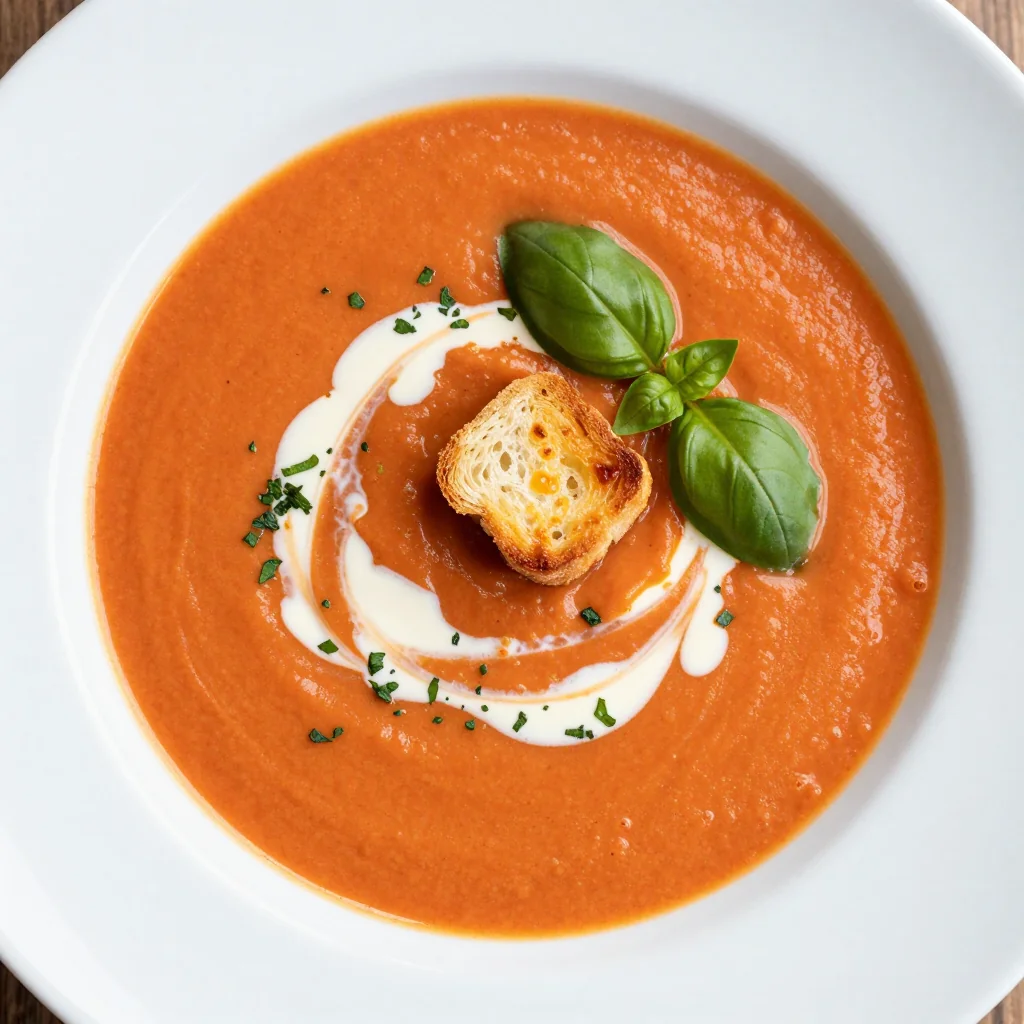
Budget-Friendly Creamy Tomato Basil Soup
Ingredients
Instructions
- Sauté Aromatics: In a heavy pot, melt butter over medium-low. Add onion, carrot, celery, and a pinch of salt; cook 8 minutes until translucent.
- Bloom Paste: Stir in garlic for 30 seconds, then tomato paste; cook 1 minute until darkened.
- Make Roux: Sprinkle in flour; stir 2 minutes to coat.
- Add Tomatoes & Stock: Pour in canned tomatoes with juice and the stock. Add dried basil and sugar. Simmer 20 minutes.
- Blend: Remove bay leaf if used. Purée with an immersion blender until smooth.
- Finish: Stir in cream and heat 30 seconds. Season with salt and pepper. Stir in fresh basil and serve hot.
Recipe Notes
For a vegan version, use olive oil and coconut milk. Soup thickens as it cools—thin with broth when reheating.