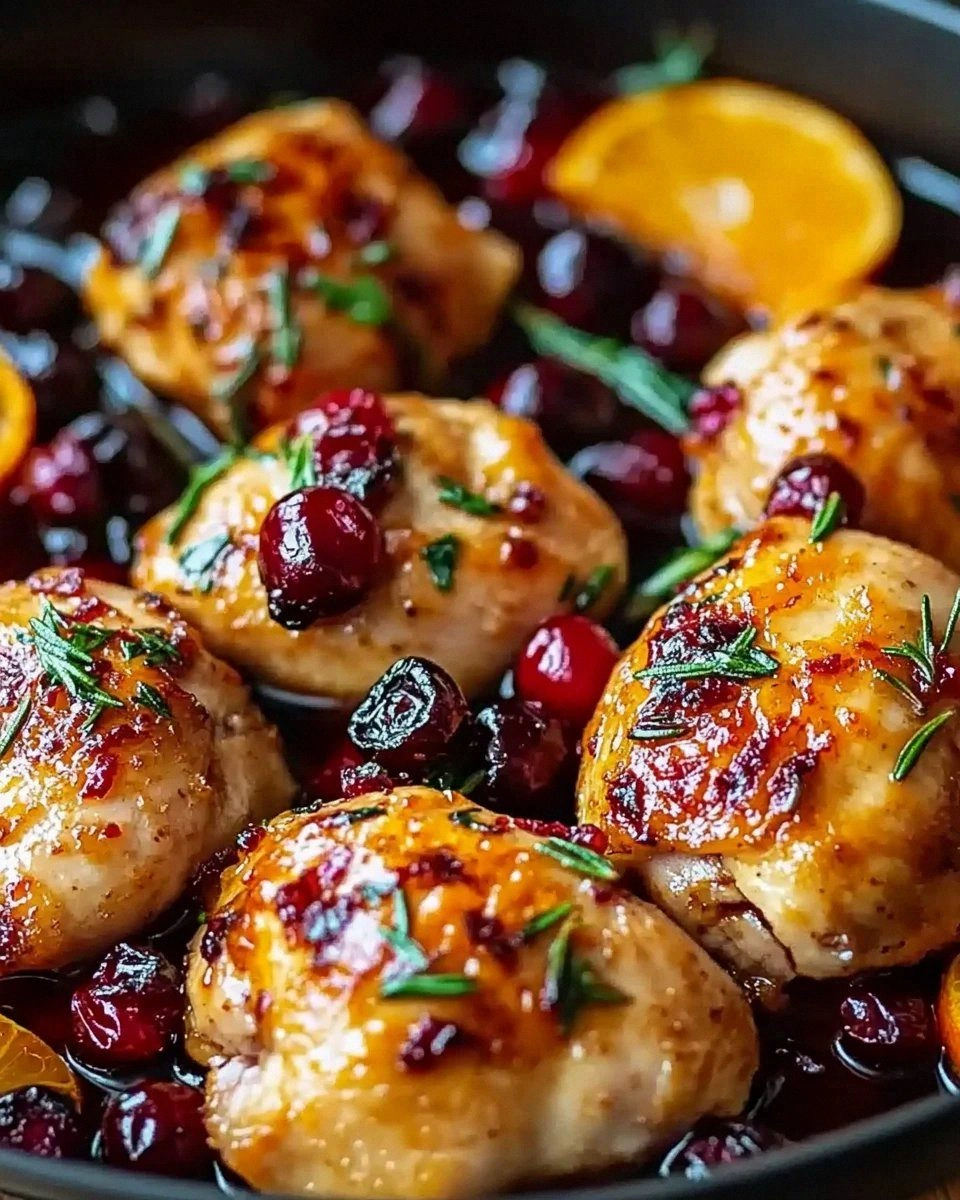
I swear, the first time I tried to make a simple chicken dinner, I ended up with a pan that looked like a crime scene—smoke, burnt bits, and a lingering scent of regret. That disaster sparked a dare from my roommate: “Make something that actually smells like a holiday market and doesn’t set off the fire alarm.” I accepted, and after countless trial runs, I finally cracked the code with this Cranberry Orange Chicken with Rosemary. The moment the orange zest hits the pan, it’s like a fireworks display for your nose, and the cranberries burst with a pop that reminds you of stepping on fresh snow. This isn’t just another weeknight recipe; it’s a full‑on sensory celebration that makes you feel like you’ve just stepped out of a cozy kitchen in a mountain lodge.
Picture this: the kitchen humming with the low sizzle of olive oil, the air thick with the sweet‑tart perfume of orange and cranberry, and a hint of rosemary that whispers of pine forests. You’ll hear the gentle pop of cranberries as they caramelize, feel the heat radiating from the pan, and taste a perfect balance of sweet, tangy, and herbaceous notes that dance on your palate. Most recipes try to be clever with a splash of orange juice or a handful of dried cranberries, but they miss the mark on texture and depth. I’m about to reveal the secret ingredient that takes this dish from “good” to “hands down the best version you’ll ever make at home.”
Why does this version stand out? Because I dared to combine fresh cranberries with a bright orange reduction, and I let rosemary (or thyme, if you’re feeling indecisive) steal the spotlight. The chicken stays juicy thanks to a quick sear followed by a gentle simmer, and the sauce clings to each piece like a velvet cloak. I’ll be honest — I ate half the batch before anyone else got to try it, and that’s a confession I’m not ashamed of. The balance of honey, balsamic, and Dijon creates a complex glaze that you’ll want to spoon over everything, from rice to roasted veggies.
Okay, ready for the game‑changer? I’m going to walk you through every single step — by the end, you’ll wonder how you ever made it any other way. I dare you to taste this and not go back for seconds. Let’s dive in, and remember: if you’ve ever struggled with a soggy sauce or bland chicken, you’re not alone — and I’ve got the fix.
What Makes This Version Stand Out
- Flavor Explosion: The marriage of bright orange zest and tart cranberries creates a taste that’s both festive and comforting, making every bite unforgettable.
- Texture Triumph: A quick sear locks in juices, while the sauce finishes with a glossy, slightly sticky coat that clings like a second skin.
- Simplicity Meets Sophistication: Only a handful of pantry staples are needed, yet the result feels like a dish you’d order at a high‑end bistro.
- Ingredient Quality: Fresh cranberries and a whole orange (not juice) give natural brightness that bottled versions can’t mimic.
- Crowd‑Pleaser Factor: The sweet‑tart profile wins over kids and adults alike; I’ve seen grown‑ups fight over the last piece.
- Cooking Method Magic: The two‑step technique—sear then simmer—ensures the chicken never dries out, even if you’re a bit distracted.
- Make‑Ahead Potential: The sauce actually deepens in flavor after a few hours, so you can prep ahead and reheat for a flawless dinner.
- Seasonal Flexibility: While cranberries scream holiday, the bright orange keeps it fresh for any season, making it a year‑round winner.
Inside the Ingredient List
The Flavor Base
The 1 large orange is the star of the show, providing both juice and zest. The zest carries volatile oils that give an instant lift to the sauce, while the juice adds a natural acidity that balances the honey’s sweetness. If you skip the zest, you’ll lose that bright, aromatic punch that makes the sauce sing. As a swap, you can use Meyer lemon for a slightly sweeter citrus note, but the classic orange is unbeatable.
Fresh cranberries (1 cup) bring a tart crunch that contrasts beautifully with the silky chicken. Their natural pectin helps thicken the glaze without any extra cornstarch. If fresh cranberries are out of season, frozen will do, but they release more water, so you’ll need to reduce the sauce a bit longer. Look for berries that are firm and deep red for the best flavor.
The Sweet & Sour Duo
2 tablespoons of honey or maple syrup act as the sweet counterpoint to the cranberry’s tartness. Honey adds a floral nuance, while maple brings a woody depth; choose based on your pantry. This modest amount is enough to glaze the chicken without making it cloying. If you’re watching sugar, you can halve the amount and add a splash of apple cider vinegar for extra tang.
1 tablespoon balsamic vinegar contributes a subtle earthiness and a glossy finish. Its natural sweetness deepens as it reduces, creating a rich backdrop for the fruit flavors. A good quality balsamic will have a syrupy consistency; cheap versions can taste harsh. As an alternative, you could use sherry vinegar for a milder profile.
The Aromatic Crew
2 garlic cloves, minced, provide that classic savory base that anchors the fruitiness. Garlic’s natural sugars caramelize quickly, adding a nutty undertone. If you love garlic, feel free to add an extra clove, but be careful not to overpower the delicate orange.
1 teaspoon fresh thyme or rosemary is the herbaceous kicker that ties the dish together. Rosemary’s piney notes complement the orange, while thyme offers a subtler, earthy flavor. I prefer rosemary for its boldness, but if you’re sensitive to its strong flavor, thyme is a safe bet. Fresh herbs beat dried by a mile; they release essential oils that dried herbs can’t match.
The Liquid Lift
½ cup chicken broth or water is the simmering medium that keeps the chicken moist and helps the sauce meld. Using broth adds an extra layer of umami, while water lets the fruit and vinegar shine brighter. If you’re low on broth, a splash of white wine works wonders, adding a subtle acidity and depth.
1 tablespoon olive oil is the cooking fat that gives the chicken a golden crust. A good extra‑virgin olive oil adds a fruity note, but if you prefer a higher smoke point, use a light olive oil or grapeseed oil. The oil also helps the garlic and herbs distribute evenly across the pan.
Salt and pepper, to taste, are the silent heroes. They enhance every other flavor and bring the dish into balance. Don’t be shy with the salt; it’s essential for unlocking the sweetness of the orange and the tartness of the cranberries.
1 teaspoon Dijon mustard adds a subtle heat and a creamy texture that helps bind the sauce. Its tangy profile cuts through the sweetness, preventing the glaze from becoming one‑dimensional. If you’re not a mustard fan, a dab of whole‑grain mustard works too.
Everything's prepped? Good. Let's get into the real action…
The Method — Step by Step
- Pat the 4 boneless chicken pieces dry with paper towels, then season them generously with salt and pepper on both sides. This dry‑seasoning step is crucial because it creates a flavorful crust when seared. Let the chicken rest for a minute while you prep the aromatics; this short pause lets the seasoning penetrate the meat. Power transition: Now we move to the pan.
- Heat 1 tablespoon olive oil in a large skillet over medium‑high heat until it shimmers. Add the chicken pieces, laying them away from you to avoid splatter, and sear for 3‑4 minutes per side until they develop a golden‑brown crust. You’ll hear a satisfying sizzle that signals the Maillard reaction is doing its magic. Kitchen Hack: If the pan gets too hot and the oil starts to smoke, lower the heat slightly; you want steady browning, not burnt bits.
- Remove the chicken and set it aside on a warm plate. In the same pan, add the minced garlic and let it sauté for about 30 seconds, just until fragrant. Be careful—garlic can go from aromatic to bitter in seconds, so keep an eye on it. This is the moment of truth for the flavor base.
- Add the zest of the orange (about 1 tablespoon) and the orange juice (from the same orange, squeezed). Stir, scraping up any browned bits stuck to the pan; these are flavor gold. Then pour in the ½ cup chicken broth, 1 tablespoon balsamic vinegar, and 1 teaspoon Dijon mustard. The mixture should start to bubble gently—if it’s not, increase the heat just a touch.
- Introduce the fresh cranberries and the 2 tablespoons honey (or maple syrup). Stir continuously; the cranberries will begin to pop and soften, releasing their natural pectin. As they break down, the sauce will thicken naturally. Watch Out: If the sauce starts to stick too aggressively, add a splash more broth or water to deglaze.
- Return the seared chicken to the pan, nestling each piece into the sauce. Sprinkle the 1 teaspoon fresh thyme or rosemary over the top. Reduce the heat to low, cover the skillet, and let everything simmer for 12‑15 minutes. The chicken should reach an internal temperature of 165°F (74°C) and the sauce should be glossy and clingy.
- While the chicken simmers, taste the sauce. Adjust seasoning with a pinch more salt, a grind of fresh black pepper, or an extra drizzle of honey if you prefer a sweeter finish. Remember, this sauce is the hero, so trust your palate. Power transition: The final step is all about presentation.
- When the chicken is done, transfer it to a serving platter. Spoon the luscious cranberry‑orange glaze over each piece, letting it cascade like a ruby‑red waterfall. Garnish with a few extra sprigs of rosemary or thyme for visual flair. Serve hot, and watch your guests’ eyes widen as they take that first bite. That sizzle when it hits the pan? Absolute perfection.
That's it — you did it. But hold on, I've got a few more tricks that'll take this to another level. Trust me, the next section will make your leftovers taste like a brand‑new dinner.
Insider Tricks for Flawless Results
The Temperature Rule Nobody Follows
Most home cooks crank the heat to “high” hoping to speed things up, but that’s a recipe for rubbery chicken. Keep the searing temperature at medium‑high, then drop to low for the simmer. This gentle heat allows the fibers to relax without squeezing out the juices. I once tried to rush the simmer, and the chicken turned into a dry, chewy mess—lesson learned.
Why Your Nose Knows Best
Don’t rely solely on timers; use your senses. When the garlic turns golden and the orange zest releases its perfume, you know the base is ready. The sauce should smell slightly sweet with a hint of acidity—if it smells flat, add a splash more balsamic or a pinch of sugar. Trusting your nose is a shortcut to flavor perfection.
The 5‑Minute Rest That Changes Everything
After the chicken finishes simmering, remove the lid and let it rest uncovered for five minutes. This rest allows the juices to redistribute and the sauce to thicken just enough for a glossy finish. Skipping this step results in a runny glaze that slides off the chicken. It’s a tiny pause that yields massive reward.
The Secret of Layered Sweetness
Combining honey (or maple) with balsamic vinegar creates a sweet‑sour balance that’s more complex than plain sugar. The vinegar’s acidity cuts through the honey’s richness, preventing cloying sweetness. If you prefer a milder profile, reduce the honey to 1 tablespoon and add a pinch of brown sugar.
Herb Timing Mastery
Add fresh rosemary or thyme at the very end of the simmer to preserve its bright, piney aroma. If you add it too early, the heat will mute the herb’s fragrance, leaving a muted flavor. I once tossed the herb in at the start and ended up with a bland, herb‑overpowered dish—don’t make that mistake.
Creative Twists and Variations
This recipe is a playground. Here are some of my favorite ways to switch things up:
Spicy Heat Wave
Add a diced jalapeño or a pinch of red‑pepper flakes when you sauté the garlic. The heat will contrast the sweet‑tart glaze, creating a thrilling flavor rollercoaster. Perfect for those who love a little kick.
Nutty Crunch
Stir in a handful of toasted sliced almonds or pistachios just before serving. The nuts add a buttery crunch that complements the soft cranberries and adds visual appeal. Great for a holiday table.
Herb Swap
Replace rosemary with fresh sage for an earthier, slightly peppery note, or use a blend of oregano and basil for a Mediterranean twist. Each herb changes the aromatic profile, keeping the dish fresh for repeat meals.
Vegan Make‑over
Swap the chicken for firm tofu cubes or thick slices of tempeh. Marinate the tofu in a splash of soy sauce before searing, then follow the same sauce steps. The result is a plant‑based version that still delivers that bright, tangy glaze.
Winter Warmth
Add a pinch of ground cinnamon and a splash of orange liqueur (like Grand Marnier) to the sauce for a cozy, festive flavor. This variation shines during holiday gatherings and pairs beautifully with roasted root vegetables.
Storing and Bringing It Back to Life
Fridge Storage
Let the chicken cool to room temperature, then transfer it to an airtight container with the sauce. It will keep for up to 3 days. When reheating, add a tiny splash of water or broth and gently warm on the stovetop to revive the glossy glaze.
Freezer Friendly
Portion the cooked chicken and sauce into freezer‑safe bags or containers. Freeze for up to 2 months. Thaw overnight in the fridge, then reheat in a skillet over low heat, adding a splash of broth to loosen the sauce.
Best Reheating Method
The stovetop is king. Use a low flame, cover the pan, and stir occasionally. This method prevents the chicken from drying out and restores the sauce’s silky texture. Microwaving is okay in a pinch, but you’ll lose the crisp edge.