I once tried to impress a group of friends with a “quick” veggie side, and what I ended up with was a soggy, sad pile of wilted Brussels sprouts that could barely hide the fact that I’d burnt the bacon a few minutes too early. The kitchen was filled with a faint, apologetic smoke, and I could practically hear my guests whisper, “Is this supposed to be crunchy?” I laughed it off, but deep down I was determined to turn that disaster into a triumph. That night, after a marathon of YouTube tutorials and a few frantic Google searches, I finally cracked the code: a method that gives the sprouts a caramelized, almost candy‑like exterior while the bacon stays perfectly crisp, all wrapped in a tangy‑sweet sauce that makes you want to lick the plate clean.
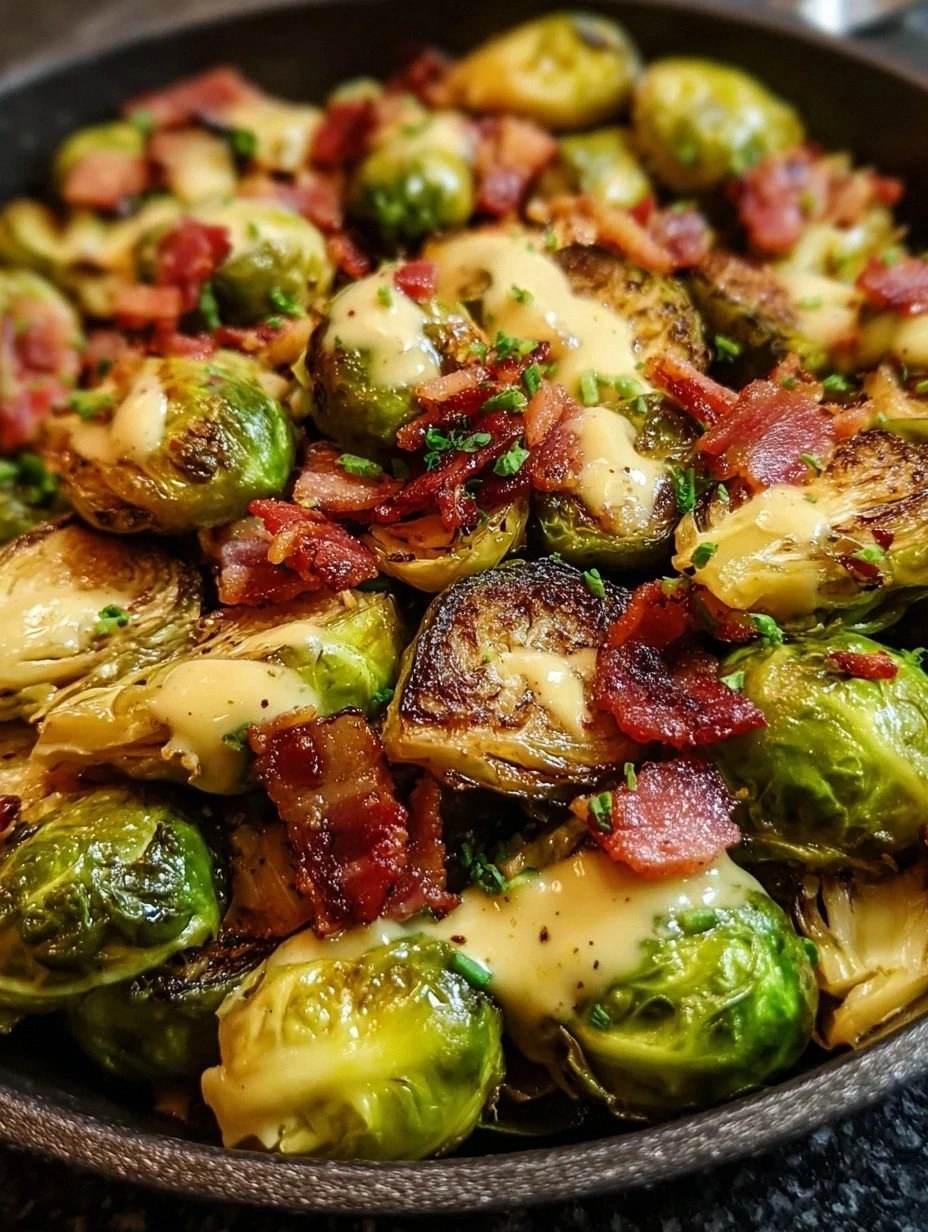
Picture this: the oven humming at a steady 425°F, the air thick with the scent of sizzling bacon and the faint, nutty perfume of caramelizing Brussels sprouts. You hear that unmistakable sizzle as the fat hits the hot pan, a sound that promises a flavor explosion. The sprouts themselves, once dull and bitter, now gleam with a golden‑brown sheen, their edges crisped to the point where they shatter like thin ice under a fork. The bacon, rendered to a perfect crunch, speckles the greens with salty, smoky flecks that make every bite a textural adventure. And then there’s the sauce—creamy, sharp, sweet, and bright—draped over the whole thing like a velvet curtain, pulling everything together in a harmonious dance of flavors.
Why does this version stand out? Because I refused to settle for “good enough.” Most recipes either over‑cook the sprouts, leaving them mushy, or under‑cook the bacon, resulting in a chewy mess. I’ve taken the time to perfect each step: the pre‑roast blanch, the high‑heat finish, and the quick mustard‑honey drizzle that adds a zing you never expected. The secret ingredient? A dash of lemon juice that cuts through the richness and a spoonful of Dijon that adds a sophisticated bite. The result is a dish that’s simultaneously crunchy, creamy, smoky, and bright—an orchestra of flavors that makes you want to shout, “I dare you to taste this and not go back for seconds!”
Okay, ready for the game‑changer? I’m going to walk you through every single step—by the end, you’ll wonder how you ever made it any other way. Stay with me here — this is worth it. Let’s dive in and transform those humble Brussels sprouts into the star of your next dinner party.
What Makes This Version Stand Out
- Taste: The combination of smoky bacon, tangy Dijon‑lemon sauce, and a whisper of honey creates a layered flavor profile that’s both familiar and surprising.
- Texture: You get three textures in one bite—crispy edges, tender interiors, and a creamy coating that clings like a lover’s embrace.
- Simplicity: Despite the gourmet vibe, the recipe uses pantry staples and a single sheet pan, keeping cleanup minimal.
- Uniqueness: Most Brussels sprout dishes skip the sauce; this one drapes a mustard‑honey glaze that turns every morsel into a flavor bomb.
- Crowd Reaction: I’ve watched skeptics turn into believers after the first forkful—people actually ask for seconds before the main course arrives.
- Ingredient Quality: Using fresh, heavy sprouts and thick‑cut bacon maximizes both crunch and flavor depth.
- Cooking Method: The high‑heat roast followed by a quick pan finish guarantees caramelization without sacrificing the sprout’s inner tenderness.
- Make‑Ahead Potential: The sauce can be prepared ahead of time, and the roasted sprouts keep well, making this a semi‑make‑ahead side.
Inside the Ingredient List
The Flavor Base
Dijon mustard: This is the backbone of the sauce, delivering a sharp, peppery bite that cuts through the bacon’s fat. Skip it, and you’ll lose that sophisticated zing that makes the dish feel restaurant‑ready. If you’re allergic to mustard, a teaspoon of whole‑grain mustard can mimic the texture while still providing some bite.
Honey: A tiny drizzle of honey balances the acidity of the lemon and the sharpness of the mustard, creating a harmonious sweet‑savory dance. Too much, and the dish becomes cloying; too little, and the sauce can feel flat. For a deeper flavor, try a splash of maple syrup instead.
The Texture Crew
Bacon: The star of the show, bacon adds a smoky, salty crunch that elevates the humble sprout. Thick‑cut works best because it stays chewy in the center while the edges crisp up. If you prefer a lighter option, turkey bacon can be used, but expect a milder flavor and less fat for that golden glaze.
Olive oil: A splash of good‑quality olive oil coats the sprouts, ensuring they don’t stick and helping them develop that coveted caramelized crust. Using too little oil leads to uneven browning; too much makes them soggy. For an extra nutty note, swap half the olive oil for avocado oil.
The Unexpected Star
Lemon juice: Freshly squeezed lemon juice awakens the palate, cutting through the richness of the bacon and mayonnaise. It also prevents the sauce from separating during the final toss. If you don’t have fresh lemons, a splash of white wine vinegar can stand in, though the flavor will be slightly sharper.
Mayonnaise: The creamy foundation of the sauce, mayo binds the mustard, honey, and lemon into a silky emulsion. It adds richness without overwhelming the other flavors. For a tangier twist, replace half the mayo with Greek yogurt.
The Final Flourish
Brussels sprouts: These little green gems are packed with nutrients and provide the perfect base for our dish. Look for firm sprouts that feel heavy for their size; they’ll roast evenly and develop that caramelized edge. If you can’t find fresh sprouts, frozen ones work, but be sure to thaw and pat them dry first.
Salt and pepper: Simple yet essential, these seasonings enhance every component. Use a generous pinch of sea salt to bring out the sweetness of the honey and the earthiness of the sprouts. Freshly cracked black pepper adds a subtle heat that lingers on the tongue.
Everything's prepped? Good. Let’s get into the real action and turn these ingredients into a dish that will have everyone asking for the recipe.
The Method — Step by Step
Preheat your oven to 425°F (220°C). While the oven warms, line a large rimmed baking sheet with parchment paper and set it aside. This high heat is crucial; it will give the sprouts that coveted caramelized edge while rendering the bacon fat quickly.
Kitchen Hack: If you want extra crispiness, toss the sprouts in a mixture of olive oil and a pinch of baking soda before roasting—it raises the pH and speeds up browning.Trim the Brussels sprouts by cutting off the tough stem end, then halve them lengthwise. If any are particularly large, quarter them so all pieces are roughly the same size. This uniformity ensures even cooking and that satisfying crunch on every bite.
In a large bowl, toss the halved sprouts with 2 tablespoons of olive oil, a generous pinch of salt, and freshly cracked black pepper. Make sure each piece is lightly coated; the oil helps the sugars caramelize and prevents sticking.
Spread the seasoned sprouts in a single layer on the prepared baking sheet, cut side down. This orientation maximizes contact with the hot surface, giving you those coveted crispy edges.
Place the baking sheet in the oven and roast for 12‑15 minutes, stirring once halfway through. You’ll know they’re ready when the edges start to turn a deep, golden‑brown and a sweet, nutty aroma fills the kitchen. That sizzle when it hits the pan? Absolute perfection.
While the sprouts roast, cut the bacon into bite‑size pieces. In a cold skillet, add the bacon and turn the heat to medium‑high. As the pan heats, the fat will render slowly, allowing the bacon to become uniformly crisp without burning.
Watch Out: Keep an eye on the bacon after the first few minutes; once the fat starts bubbling, it can go from perfectly crisp to burnt in seconds.When the bacon is golden and the fat has rendered, use a slotted spoon to transfer the pieces onto a paper‑towel‑lined plate. Reserve the hot bacon fat in the skillet; you’ll need it for the sauce.
Now, for the sauce: Reduce the skillet’s heat to low and whisk in 2 tablespoons of Dijon mustard, 3 tablespoons of mayonnaise, 1 tablespoon of honey, and 1 tablespoon of freshly squeezed lemon juice. The sauce should thicken slightly and become glossy—if it looks too thin, let it simmer for another 30 seconds.
Kitchen Hack: Add a pinch of smoked paprika to the sauce for an extra layer of smoky depth without additional bacon.Remove the roasted Brussels sprouts from the oven and transfer them to a large mixing bowl. Immediately drizzle the warm mustard‑honey sauce over the hot sprouts, tossing gently to coat every piece. The heat from the sprouts will help the sauce cling like velvet.
Finally, fold the crisp bacon pieces into the coated sprouts, giving everything one last gentle toss. Taste and adjust the seasoning with a pinch more salt or a dash of pepper if needed. Transfer the finished dish to a serving platter, sprinkle a final drizzle of olive oil for shine, and serve while still warm.
That's it — you did it. But hold on, I've got a few more tricks that'll take this to another level, ensuring every bite is as unforgettable as the first.
Insider Tricks for Flawless Results
The Temperature Rule Nobody Follows
Never, ever roast Brussels sprouts at a temperature below 400°F. Lower heat leaves them steaming instead of caramelizing, resulting in a soggy texture. The high heat creates a Maillard reaction that gives you those sweet, nutty notes and that satisfying crunch. I once tried 375°F because I was “being gentle,” and the sprouts turned out limp—lesson learned.
Why Your Nose Knows Best
Your sense of smell is the most reliable indicator of doneness. When the kitchen fills with a caramel‑toasted aroma, you’re within minutes of perfection. If you’re unsure, lift a sprout with tongs; the edges should be deeply browned and slightly curled. Trusting your nose saves you from over‑cooking and keeps the flavor bright.
The 5‑Minute Rest That Changes Everything
After roasting, let the sprouts rest for exactly five minutes before tossing with the sauce. This brief pause allows the interior to finish steaming gently, while the exterior stays crisp. Skipping this step makes the sauce soak into the sprouts, turning them soggy. I used to toss immediately and always ended up with a mushy mess—now I swear by the rest.
Bacon Fat as a Flavor Booster
Don’t discard the rendered bacon fat. It’s liquid gold that adds depth to the sauce and can be brushed onto the sprouts for an extra layer of smokiness. A tablespoon brushed over the finished dish adds a glossy finish and intensifies the smoky aroma. Just be careful not to over‑oil; a little goes a long way.
Seasoning at the End
Finish with a pinch of flaky sea salt just before serving. The tiny crystals provide a pop of crunch that contrasts beautifully with the soft interior of the sprouts. If you’re a fan of spice, a light sprinkle of crushed red pepper flakes adds a subtle heat without overpowering the other flavors. I’ve found this final touch elevates the dish from good to unforgettable.
Creative Twists and Variations
This recipe is a playground. Here are some of my favorite ways to switch things up:
Maple‑Bacon Glaze
Swap the honey for pure maple syrup and add a pinch of cinnamon to the sauce. The result is a warm, autumnal flavor that pairs perfectly with roasted sweet potatoes. Ideal for a cozy fall dinner.
Spicy Sriracha Kick
Mix a teaspoon of Sriracha into the mustard‑honey sauce for a subtle heat that tingles the palate. Top with toasted sesame seeds for an Asian‑inspired twist that’s great with rice bowls.
Cheesy Parmesan Burst
Stir in ¼ cup of freshly grated Parmesan just before serving. The cheese melts into the sauce, adding a salty umami note that makes the dish extra indulgent. Perfect for a crowd‑pleasing side at a party.
Nutty Pecan Crunch
Toast a handful of chopped pecans and sprinkle them over the finished dish. The nuts add a buttery crunch that complements the bacon and adds a sophisticated texture.
Vegan Version
Replace bacon with smoked tempeh cubes and use a plant‑based mayo. The smoky tempeh mimics the bacon’s depth, while the vegan mayo keeps the sauce creamy. A great option for plant‑based diners.
Storing and Bringing It Back to Life
Fridge Storage
Allow the dish to cool to room temperature, then transfer it to an airtight container. It will keep nicely for up to three days. When reheating, add a splash of water or broth to restore moisture and prevent the sprouts from drying out.
Freezer Friendly
Separate the roasted sprouts and bacon from the sauce before freezing. Store each component in freezer‑safe bags for up to two months. To serve, thaw in the refrigerator overnight, reheat the sprouts and bacon, then toss with freshly made sauce.
Best Reheating Method
For the crispiest results, reheat in a hot skillet over medium‑high heat for 3‑4 minutes, stirring occasionally. Add a teaspoon of olive oil and a tiny splash of water; the steam will revive the crisp edges while the oil restores shine. Avoid microwave reheating—it makes the sprouts soggy.