Love this? Pin it for later! 📌
There’s a moment every December—usually right after the tree is trimmed, when the house smells of pine and cinnamon—when I realize I haven’t planned the holiday side dishes. Again. Somewhere between wrapping teacher gifts and finding the mismatched stockings, I remember that the turkey (or the nut-roast, depending on the year) needs a vibrant, comforting partner on the plate. That’s when I reach for this maple-Dijon glazed root-vegetable medley. It’s the dish that converted my die-hard mashed-potato-only dad into a beet believer and coaxed my eight-year-old niece to proclaim, “These carrots taste like candy!” (Mission accomplished.)
What makes this recipe a perennial favorite is the way it balances earthy sweetness with tangy brightness. Maple syrup does the heavy lifting in the caramelization department, while whole-grain Dijon adds a pop of acidity and those gorgeous mustard seeds that cling to every cube of roasted vegetable like edible confetti. A whisper of fresh rosemary and orange zest lifts the whole thing into holiday territory—familiar yet special enough to earn a permanent spot on your celebration table. Best of all, it plays nicely with whatever centerpiece you’re serving: turkey, ham, beef tenderloin, or a vegetarian wellington.
Why This Recipe Works
- One-pan wonder: everything roasts together, freeing up oven real estate for the main event.
- Make-ahead friendly: chop and par-cook vegetables up to 24 hours in advance.
- Natural sweetness: maple syrup caramelizes at high heat, creating candy-like edges without refined sugar.
- Texture contrast: a final drizzle of glaze after roasting keeps some pieces sticky-glossy and others crisp.
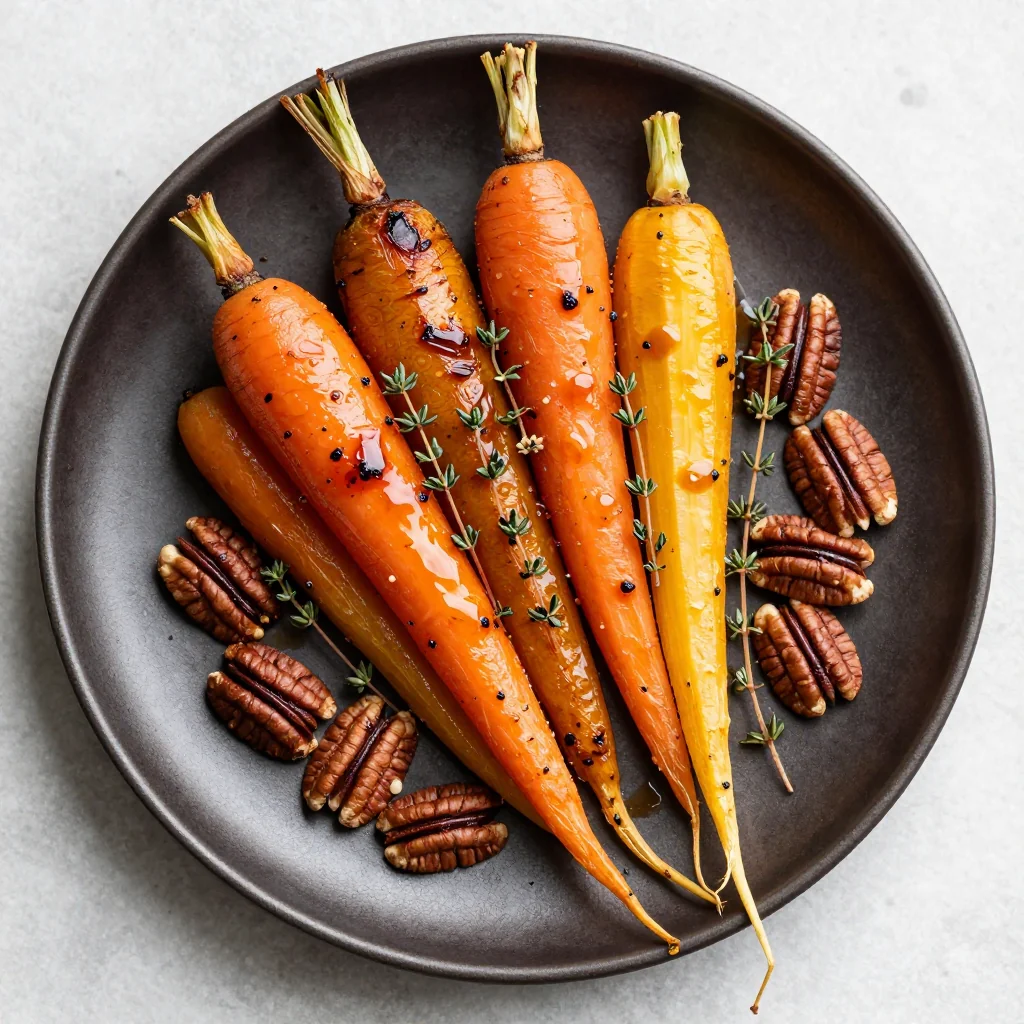
- Vibrant color: ruby beets, sunset carrots, and golden parsnips look like holiday ornaments on a platter.
- Dietary inclusivity: naturally gluten-free, dairy-free, nut-free, and vegan—everyone around the table can partake.
- Leftover magic: fold chilled leftovers into grain bowls or puree into a soup with a splash of stock.
Ingredients You'll Need
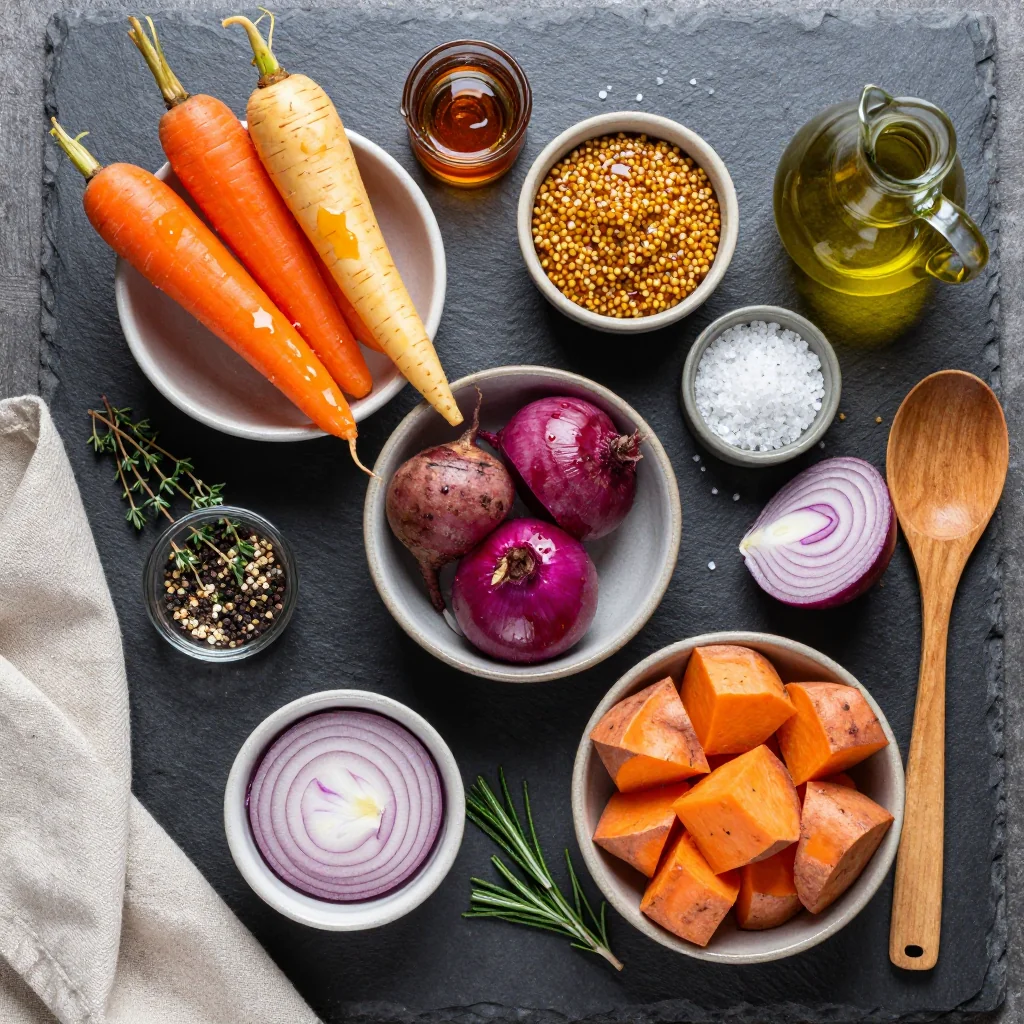
Vegetables are the star, so buy the freshest, firmest roots you can find. Farmers-market bunches still kissed with soil will roast more evenly than the pre-trimmed bags that have been sitting in a warehouse. Look for beets with smooth, unblemished skins and carrots that still have their tops—those feathery greens are a sign of freshness. Parsnips should feel dense, not hollow, and should be no wider than an inch; larger ones have woody cores.
Maple syrup: Do yourself a favor and reach for the dark, robust “Grade A” syrup formerly known as Grade B. It has a deeper, more complex flavor that won’t fade under heat. Avoid anything labeled “pancake syrup,” which is just corn syrup in disguise.
Whole-grain Dijon: Those tender mustard seeds burst with tangy wine-vinegar brightness and give the glaze visual texture. If you only have smooth Dijon, that’s fine—just add ½ teaspoon of mustard seeds for the same pop.
Fresh rosemary: Woody herbs like rosemary, thyme, or sage hold up under high heat. Strip the leaves from the stem and mince finely; big needles can taste like pine needles. In a pinch, 1 teaspoon dried rosemary equals 1 tablespoon fresh, but fresh is worth the splurge.
Orange zest: A micro-plane swipe of citrus oil balances the sweet-salty glaze. If you’re out of oranges, swap in ½ teaspoon apple-cider vinegar for acidity.
Extra-virgin olive oil: Choose a buttery, mild oil rather than a peppery Tuscan style; you want the maple-Dijon to shine.
How to Make Maple-Dijon Glazed Root Vegetables for Cozy Holiday Dinners
Prep & par-cook dense vegetables
Preheat oven to 425 °F (220 °C). Peel beets and cut into ¾-inch cubes. Place in a microwave-safe bowl with 2 tablespoons water, cover, and microwave on high for 4 minutes. This jump-starts the cooking so every vegetable finishes at the same time. (Alternatively, simmer in salted water for 6 minutes.) Drain and set aside.
Slice companions
While the beets steam, scrub carrots and parsnips but leave the skins on for rustic appeal and extra nutrients. Slice on a sharp diagonal into ½-inch ovals so they echo the beet cubes. Cut red onion into 1-inch petals; these will char into sweet, jammy bites.
Whisk the glaze
In a small bowl, combine ¼ cup dark maple syrup, 2 tablespoons whole-grain Dijon, 2 tablespoons extra-virgin olive oil, 1 tablespoon fresh rosemary, 1 teaspoon kosher salt, ½ teaspoon black pepper, and ½ teaspoon orange zest. Whisk until emulsified. Reserve 2 tablespoons of the glaze to brush on after roasting for a glossy finish.
Toss and line up
Spread vegetables on a parchment-lined half-sheet pan. Drizzle with the glaze and toss until every surface is slick and shiny. Arrange in a single layer, keeping beets on one side if you’re worried about color bleed, though the hue mellows into a jewel-tone sunset.
Roast undisturbed
Slide the tray into the middle rack and roast for 20 minutes. High heat encourages Maillard browning; the maple sugars bubble and create dark lacquer spots. Do not flip yet—let the bottoms sear.
Stir for even caramelization
Using a thin metal spatula, gently lift and turn the vegetables. If any pieces stick, coax them with the spatula; the glaze acts like glue once it starts to set. Rotate the pan 180° for even browning and roast another 15 minutes.
Test for doneness
Beets should be fork-tender and carrots glossy on the outside but still with a gentle bite inside. If you prefer a softer texture, drizzle 2 tablespoons water over the tray to create a quick steam, and roast 5 more minutes.
Finish with fresh glaze
Remove tray from oven and immediately brush the reserved fresh glaze over the vegetables. The residual heat will set the syrup without making it sticky. Transfer to a warm serving platter and sprinkle with additional rosemary needles or pomegranate arils for holiday sparkle.
Expert Tips
Hot pan, cold glaze
Always add the final glaze to hot vegetables; the temperature differential helps it adhere without becoming gummy.
Uniformity matters
Cut vegetables the same size so they roast evenly. A diagonal slice maximizes surface area for glaze coverage.
Don’t crowd the tray
Overcrowding steams instead of roasts. Use two pans if doubling; swap shelves halfway through.
Sheet-pan clean-up
Line with parchment or a reusable silicone mat. Maple sugar loves to weld itself to bare metal.
Rapid chill trick
Need to stop carry-over cooking? Slide the veg onto a cold baking sheet and toss; they’ll cool in under 3 minutes.
Glaze doubling
Double the glaze and keep half in a jar; it’s fantastic brushed on salmon or tossed with Brussels sprouts later in the week.
Variations to Try
- Sweet-potato swap: Replace parsnips with orange-fleshed sweet potatoes for a more autumnal palette. Reduce roasting time by 5 minutes.
- Spicy kick: Whisk ¼ teaspoon cayenne into the glaze for a gentle back-of-throat warmth that plays beautifully with the maple.
- Citrus swap: Sub ruby grapefruit zest and juice for orange for a bittersweet note. Garnish with fresh mint instead of rosemary.
- Maple-balsamic: Replace 1 tablespoon maple syrup with balsamic vinegar for deeper complexity; finish with toasted hazelnuts.
- Root-veg hummus: Puree chilled leftovers with a can of chickpeas, tahini, and lemon juice for a festive holiday dip.
Storage Tips
Make-ahead: Peel and cube vegetables (except onions) up to 24 hours ahead. Store in a zip-top bag with a slightly damp paper towel to prevent drying. Keep glaze in a jar; olive oil may solidify—simply let it sit at room temp 15 minutes and re-whisk.
Leftovers: Cool completely, transfer to an airtight container, and refrigerate up to 4 days. To reheat, spread on a sheet pan, cover loosely with foil, and warm at 350 °F for 10 minutes. A quick stint under the broiler revives the glaze’s shine.
Freezer: Freeze roasted vegetables in a single layer on a tray, then transfer to a freezer bag for up to 2 months. Thaw overnight in the fridge and reheat as above. Texture will be softer but flavor remains stellar in soups or grain bowls.
Frequently Asked Questions
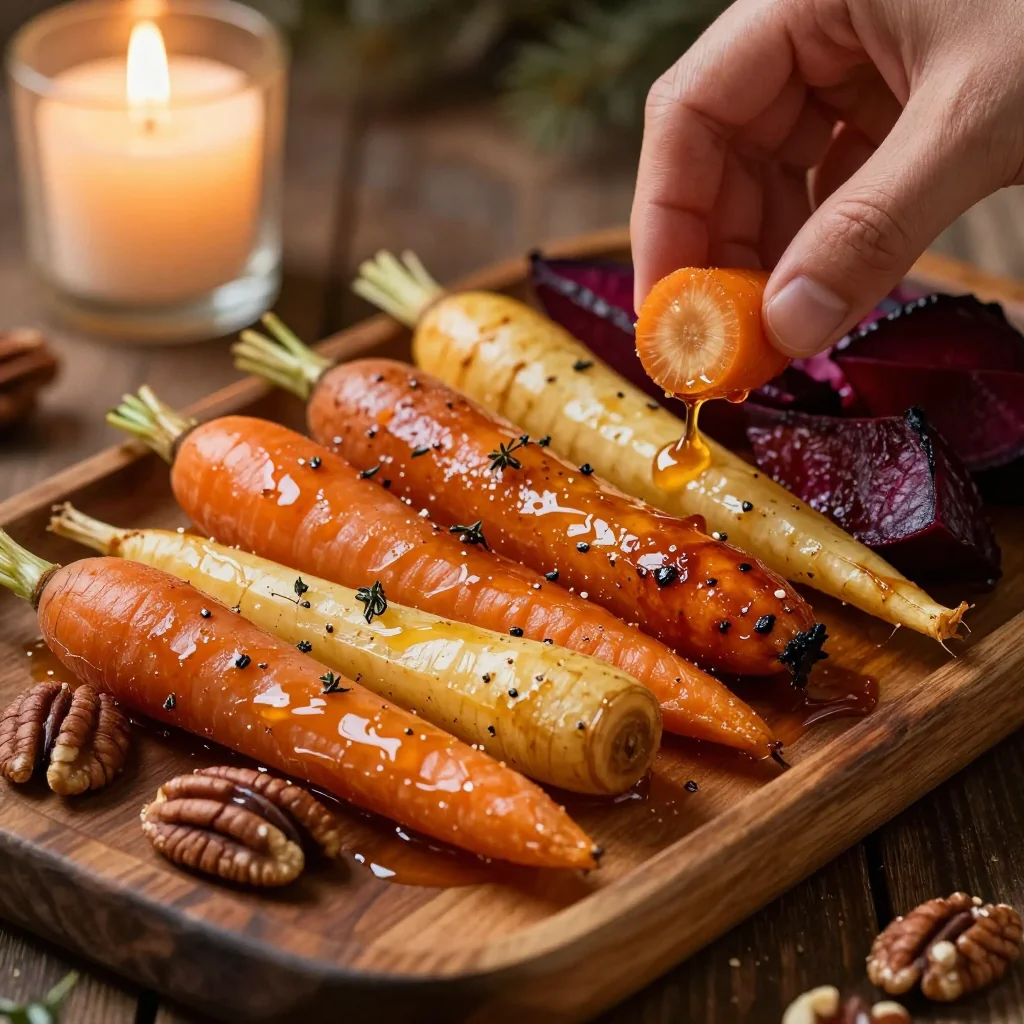
Maple-Dijon Glazed Root Vegetables for Cozy Holiday Dinners
Ingredients
Instructions
- Preheat & par-cook: Preheat oven to 425 °F. Microwave beets with 2 Tbsp water, covered, 4 minutes. Drain.
- Make glaze: Whisk maple syrup, Dijon, olive oil, rosemary, salt, pepper, and orange zest. Reserve 2 Tbsp.
- Season vegetables: Toss beets, carrots, parsnips, and onion with remaining glaze on parchment-lined sheet.
- Roast: Spread in single layer; roast 20 minutes. Stir, rotate pan, roast 15 minutes more.
- Finish & serve: Brush reserved glaze over hot vegetables. Garnish and serve warm.
Recipe Notes
For extra shine, broil 1 minute after brushing on final glaze. Watch closely—maple syrup burns fast.