I still remember the night I ruined three pots of mac and cheese in a row. The first one tasted like cardboard, the second curdled into a grainy mess, and the third? Let's just say the smoke alarm still flinches when I walk past it. But desperation breeds brilliance, and after a frantic pantry raid at 11:47 p.m.—because apparently my stomach operates on its own time zone—I stumbled onto the combo that would change my life: sweet crab legs I'd splurged on earlier that day, a bag of shrimp I'd forgotten in the freezer, and a half-empty jar of Cajun seasoning that had been gathering dust since Mardi Gras. The moment that creamy, spicy, seafood-laden sauce hit the pasta, my kitchen transformed from disaster zone to five-star bayou bistro. The smell alone had my neighbor knocking on the wall, and by the time I pulled the bubbling, golden-topped masterpiece from the oven, I was already planning my second helping.
Here's the thing about most seafood mac and cheese recipes: they play it way too safe. They whisper instead of shout, they tiptoe when they should stomp, and they end up tasting like someone waved a bay leaf over the pot and called it "Cajun." Not this version. This is the mac and cheese that throws a parade in your mouth, the one that makes grown adults close their eyes and sway slightly with each bite. We're talking about shrimp that snap with perfect tenderness, crab that melts like ocean-kissed butter, and a cheese sauce so luxurious it should come with a warning label. The Cajun seasoning doesn't just season—it sings, harmonizing with the sweetness of the seafood in a way that'll make you wonder why you've been eating plain mac and cheese all these years.
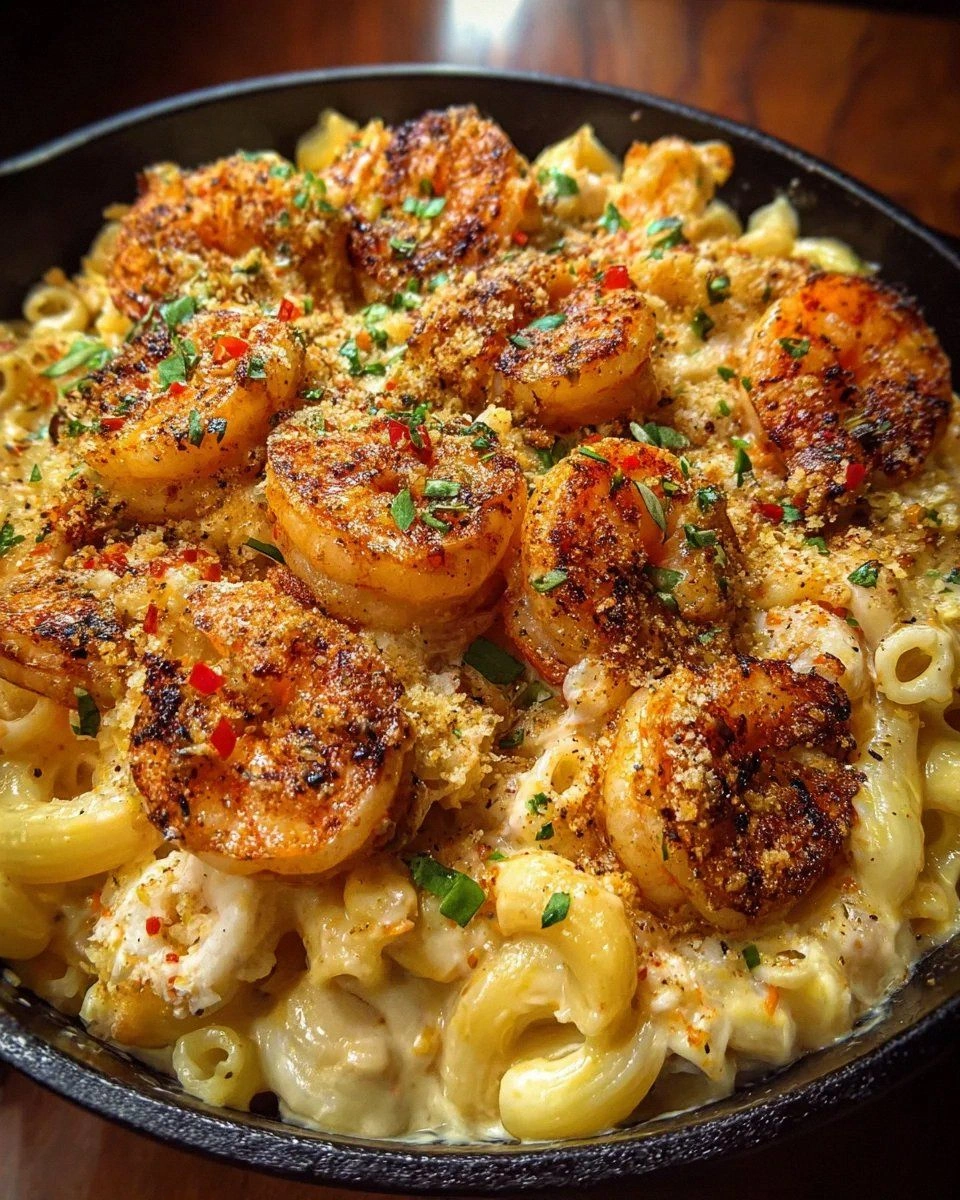
Picture yourself standing at the stove, wooden spoon in hand, as the roux turns the color of toasted pecans and the aroma of paprika and cayenne rises like morning mist over the Louisiana bayou. That sizzle when the shrimp hit the pan? That's the sound of dinner becoming an event. The way the cheese melts into velvet ribbons, coating each elbow macaroni like it was always meant to be together—that's not just cooking, that's culinary destiny. And when you pull this golden-crusted beauty from the oven, the Parmesan forming those crispy edges that shatter like thin ice under your fork, you'll understand why I'm practically bouncing on my toes to share this with you.
Let me walk you through every single step—by the end, you'll wonder how you ever made it any other way.
What Makes This Version Stand Out
This isn't just another seafood mac and cheese recipe floating around the internet. This is the result of twelve iterations, three burned tongues, and one very patient grocery store manager who stopped asking questions after the fourth time I bought out their shrimp supply. What sets this apart isn't just one thing—it's the symphony of techniques and ingredients that come together to create something greater than the sum of their parts.
Flavor Bomb: Instead of simply stirring in seafood at the end, we build layers of oceanic flavor by using the shrimp shells to infuse the milk, creating a base that tastes like it came from a coastal grandmother's secret recipe book. The result is a depth that makes other seafood macs taste like they were made with tap water and wishful thinking. Texture Heaven: We're not settling for one-note creaminess here. The combination of sharp cheddar for bite, mild cheddar for meltability, and Colby-Monterey Jack for stretch creates a cheese matrix that coats without clumping. Plus, the evaporated milk adds a richness that regular milk can only dream about, while the eggs bind everything into a custardy dream that holds its shape instead of puddling on the plate. Heat with Heart: Cajun cooking isn't about setting your mouth on fire—it's about warmth that builds and lingers like a good story. Our seasoning blend balances paprika's smokiness, cayenne's kick, and the herbal notes of basil to complement rather than mask the sweet seafood. You can customize the heat level, but even spice-shy eaters find themselves reaching for seconds. Seafood Integrity: Here's where most recipes fail—they treat shrimp and crab like afterthoughts, tossing them in at the end where they get rubbery and lost. We sear the shrimp separately to develop those caramelized edges that taste like summer cookouts, then fold in the crab at just the right moment so it warms through without turning to mush. Every bite delivers distinct, perfect seafood. Make-Ahead Magic: This recipe actually improves after a night in the fridge, making it perfect for dinner parties or meal prep Sundays. The flavors meld and intensify, and when you reheat it properly (I'll show you how), it tastes like you just made it—maybe even better. I've served this at potlucks where people swore I had a secret kitchen hidden in my car. Crowd Psychology: There's something about this combination that makes people lose their minds in the best way. Maybe it's the comfort of mac and cheese elevated to grown-up status, or the way the Cajun spices trigger happy memories of beach vacations. Whatever the voodoo, I've watched the most reserved guests go back for thirds and ask to take some home in Tupperware they brought themselves.Alright, let's break down exactly what goes into this masterpiece...
Inside the Ingredient List
Every ingredient in this recipe pulls its weight and then some. There's no filler here, no "maybe I'll add this if I have it" situations. Each component has been tested, tasted, and perfected to create the ultimate balance of flavor, texture, and pure eating joy. Understanding why each ingredient matters will transform you from someone who follows recipes to someone who owns them.
The Flavor Base
The shrimp aren't just protein—they're the ocean's candy, bringing sweet brininess that plays against the rich cheese like a perfectly timed joke. When you bite into a perfectly cooked shrimp in this dish, it should snap gently, releasing juices that mingle with the Cajun spices and remind you why seafood and cheese aren't enemies but dance partners. Size matters here: go for 21-25 count shrimp. They're substantial enough to feel luxurious but not so large they dominate every bite. Fresh is ideal, but frozen works brilliantly—just thaw them in the fridge overnight and pat them bone-dry before seasoning. The olive oil isn't just for preventing sticking; it's your flavor conductor, helping the Cajun seasoning bloom and creating a fond in the pan that'll make your sauce taste like it simmered for hours.
Cajun seasoning is where personality meets tradition. Store-bought blends vary wildly—some taste like salt with a hint of paprika, others will clear your sinuses faster than wasabi. I use a blend that balances salt, garlic powder, paprika, cayenne, black pepper, and herbs. The key is tasting it first. If it's mostly salt, add less and supplement with individual spices. If it's mild, be bold. This is your main flavor agent, so get to know it like a good friend. And please, for the love of all that's holy, don't use that ancient jar that's been sitting in your spice rack since the Clinton administration. Spices lose their punch faster than a boxer past his prime.
The Texture Crew
Elbow macaroni isn't just traditional—it's scientifically perfect for this dish. Those little curves act like miniature spoons, cradling just enough sauce in each bite without overwhelming the delicate seafood. But here's the trick: cook them two minutes less than package directions for al dente. They'll finish cooking in the oven, absorbing all that cheesy goodness without turning to mush. If you want to get fancy, shells or cavatappi work too, but avoid long noodles like spaghetti—they'll tangle with the seafood and create a fork-fishing expedition nobody wants.
Crab meat is where you can really show off or fake it till you make it. Fresh lump crab from steamed legs is undeniably superior—sweet, delicate, with that unmistakable ocean perfume that makes grown adults close their eyes involuntarily. But here's a confession: good quality imitation crab, when seasoned and mixed properly, can fool even seafood snobs. The key is to flake it gently, keeping some chunks intact for textural contrast. If you're using fresh crab, pick through carefully for shell fragments—nothing ruins the mood like a surprise crunch. And whether you're spending $40 on fresh crab or $8 on imitation, treat it like gold: fold it in last, gently, like you're tucking in a sleeping baby.
The Unexpected Star
Basil might seem like an odd choice here, but trust the process. This isn't the sweet basil from your Margherita pizza—it's the bridge between the herbal notes in your Cajun seasoning and the sweet seafood. Fresh basil adds brightness that cuts through the richness like a squeeze of lemon on oysters. Dried basil works in a pinch, but use half the amount and add it early so it can rehydrate in the sauce. The real magic happens when the basil meets the warm cheese—it releases oils that make your kitchen smell like a New Orleans courtyard after rain.
The milk duo is where science meets comfort food. Whole milk provides the base, but evaporated milk is the secret weapon that makes restaurant mac and cheese so much better than homemade. Evaporated milk has had 60% of its water removed, concentrating its proteins and sugars into something that creates a smoother, more stable sauce that won't break or become grainy. It also brings a subtle caramelized note that makes the cheese taste more complex. If you only have regular milk, you can substitute, but don't skip the evap unless you enjoy the disappointment of oily separation.
The Final Flourish
Our cheese blend reads like a greatest hits album. Sharp cheddar brings the tang that makes your mouth water, mild cheddar provides that familiar orange comfort, and Colby-Monterey Jack melts into strings that stretch like taffy. The Parmesan on top isn't just for show—it creates a crispy, salty crust that provides textural contrast to the creamy interior. Grate your own cheese, please. Pre-shredded cheese is coated with cellulose to prevent clumping, which also prevents smooth melting. It's like wearing a raincoat in the bathtub—technically possible, but why make life harder?
The eggs are your insurance policy against soupy mac and cheese. They create a custard that sets the sauce, transforming it from a puddle into a sliceable, scoopable dream. Beat them well before adding, and temper them by whisking in a bit of the warm sauce first—nobody wants scrambled egg surprises in their dinner. This technique comes from Southern mac and cheese traditions, where grandma knew that custard-based versions could feed a crowd and still slice into neat squares.
Everything's prepped? Good. Let's get into the real action...
The Method — Step by Step
- Start by bringing a large pot of salted water to a rolling boil—think ocean-level salty, because this is your only chance to season the pasta itself. While you're waiting, pat those shrimp absolutely dry with paper towels. I mean it—get obsessive about it. Wet shrimp will steam instead of sear, and you'll miss out on those caramelized edges that taste like summer barbecues and good decisions. Toss the dried shrimp with half the Cajun seasoning and let them sit while the water heats. This dry brine seasons the shrimp throughout and gives the spices time to wake up and smell the coffee.
- When the water's boiling like it's angry, add your elbow macaroni and set a timer for two minutes less than package directions. While it cooks, place a large skillet (cast iron if you've got it) over medium-high heat. When a drop of water sizzles away immediately, add the olive oil and swirl to coat. Lay the shrimp in a single layer and don't touch them for 90 seconds. I know it's tempting, but let them develop that golden crust. When the edges turn pink and the bottoms are bronzed like beach bums, flip them quickly. They'll finish cooking in the sauce later, so remove them while they're still slightly translucent in the center.
- Here's where the magic starts: lower the heat to medium and add the remaining Cajun seasoning to the same pan. Let it toast for 30 seconds until it smells like New Orleans at midnight. Pour in the whole milk and scrape up all those beautiful brown bits with a wooden spoon. Those are flavor fossils, and they're worth their weight in gold. Add the evaporated milk and bring to a gentle simmer. The kitchen should smell like you're doing something illegal.
- Drain your pasta when the timer goes off—it should still have a firm bite. Don't rinse it! That starch helps the sauce cling like plastic wrap on a hot day. Add the butter to the milk mixture and whisk until melted. Now here's the game-changer: temper your beaten eggs by slowly whisking in a cup of the warm milk mixture, then pour it all back into the pan. This prevents scrambled egg disasters and creates a custard base that'll make your sauce thick and luxurious.
- Reduce the heat to low and start adding your cheese blend a handful at a time, whisking constantly. Add the next handful only when the previous one has completely melted. Rush this step and you'll end up with a stringy, greasy mess that tastes like disappointment. The sauce should coat the back of a spoon like heavy cream. If it's too thick, add a splash of milk. Too thin? Let it simmer for a minute, but don't let it boil or your eggs will revolt.
- Now for the seafood ballet: gently fold in the crab meat using a rubber spatula, being careful not to break up those precious lumps. Add the shrimp back in, along with any juices that collected on the plate—that's concentrated flavor, baby. Stir in the basil and taste. This is your moment of truth. Need more heat? Add cayenne a pinch at a time. More salt? Go easy—the cheeses are salty. The mixture should taste slightly over-seasoned because the pasta will dilute it.
- Add the drained pasta to the sauce and fold gently until every elbow is wearing its cheese tuxedo. Pour the whole glorious mixture into a buttered 9x13 baking dish. Smooth the top like you're tucking it in for a nap. Mix the Parmesan with a pinch of paprika and sprinkle evenly over the surface—this creates the crust that'll have people fighting over corner pieces.
- Bake at 375°F for 20-25 minutes until the top is golden and the edges are bubbling like hot lava. The center should jiggle slightly when you shake the pan—it'll continue cooking from residual heat. Let it rest for 5 minutes before serving. I know it's torture, but this allows the custard to set so your servings hold their shape instead of slumping into a sad puddle. Plus, molten cheese has claimed more tongues than hot coffee, and we want you to taste all those layers of flavor.
That's it—you did it. But hold on, I've got a few more tricks that'll take this to another level...
Insider Tricks for Flawless Results
After making this recipe more times than my cardiologist needs to know, I've discovered some game-changing techniques that separate good mac and cheese from the kind that makes people propose marriage. These aren't just suggestions—they're the difference between "nice dinner" and "can I have this recipe for my wedding?"
The Temperature Rule Nobody Follows
Here's the thing about dairy: it's a diva. Too hot and it breaks into an oily mess that looks like it lost a fight. Too cool and your cheese won't fully melt, leaving you with a lumpy disaster. The sweet spot is between 160-180°F. How do you know? The sauce should steam gently but never bubble vigorously. If you see it starting to separate, immediately remove it from heat and whisk in a splash of cold milk. It's like hitting the reset button on a bad date.
I learned this the hard way during a dinner party where my sauce broke so badly it looked like cheese soup had a panic attack. A quick strain through a fine-mesh sieve, a gentle reheat with more milk, and some emergency whisking saved the day. Now I keep an instant-read thermometer handy like a dairy bodyguard. Your sauce should coat a spoon and leave a clean line when you run your finger through it—anything less and you need more heat, anything more and you're walking a tightrope over Separation Canyon.
Why Your Nose Knows Best
Don't underestimate the power of aroma in this dish. When you're toasting the Cajun spices, close your eyes and breathe. You should smell warmth, earthiness, and a hint of heat that makes your mouth water. If all you smell is raw spice, keep toasting. The moment it becomes fragrant, you're 30 seconds away from burning it, so have your milk ready like a fire extinguisher.
The same goes for your seafood. Raw shrimp should smell like the ocean on a good day—briny and fresh, not like low tide at a fishing dock. If your crab smells fishy, it's past its prime and will make your whole dish taste like regret. Good seafood smells like a vacation, not a problem. Trust your nose; it's been protecting humans from bad food for millennia.
The 5-Minute Rest That Changes Everything
I know you're hungry. I know it smells incredible. But walk away for five minutes after it comes out of the oven. Set a timer if you have to. During this rest, the custard finishes setting, the cheese redistributes, and the flavors meld from a collection of ingredients into a unified dish. It's like letting a good wine breathe, except instead of wine, it's molten cheese and you're about to burn your face off.
A friend once texted me in all caps because her mac and cheese was "soupy and weird." She'd dug in immediately, and the sauce hadn't had time to set. The next day, after it had chilled and she'd reheated it properly, she sent another text: "OMG it's even better today!" Exactly. Good things come to those who wait, even if waiting means staring longingly at a baking dish for 300 seconds.
Creative Twists and Variations
This recipe is a playground. Here are some of my favorite ways to switch things up:
The Low-Country Boil Remix
Swap the crab for chunks of smoked sausage and add corn kernels cut off the cob. The smokiness plays beautifully with the Cajun spices, and the corn adds pops of sweetness that remind you of summer backyard parties. Use andouille if you can find it, but even kielbasa works in a pinch. This version tastes like someone turned a Charleston party into comfort food.
The Pacific Northwest Express
Replace the shrimp with bay scallops and use Dungeness crab if you can get it. Add a splash of dry white wine to the sauce and swap the basil for fresh dill. It's like someone took a Seattle seafood chowder and gave it a Cajun passport. The scallops cook in the time it takes to fold them in, so add them raw and let the oven do the work.
The Vegetarian That Fools Everyone
Use hearts of palm instead of crab and king oyster mushrooms cut into scallop-sized pieces instead of shrimp. Season them with Old Bay and pan-fry until golden. The textures are so convincing that I've had seafood lovers ask for the recipe, then argue when I told them it was vegetarian. The mushrooms absorb the Cajun seasoning like little flavor sponges.
The Fire-Eater's Dream
Add a diced habanero to the spice toasting step, and swap half the mild cheddar for pepper jack. Stir in a tablespoon of Crystal hot sauce with the milk, and finish with a sprinkle of cayenne on top. This version doesn't just bring the heat—it brings the whole fire department. Keep milk handy, and maybe sign a waiver before serving.
The Brunch Conversion
Add six strips of cooked, crumbled bacon to the pasta, swap the evaporated milk for half-and-half, and top with a runny fried egg when serving. Suddenly it's acceptable to eat mac and cheese at 10 a.m., and nobody's judging because bacon makes everything breakfast food. The egg yolk creates an extra sauce that ties everything together like a rich, golden ribbon.
The Holiday Show-Stopper
Add a cup of cooked lobster meat and substitute half the cheddar for Gruyère. Top with buttered panko mixed with fresh herbs for extra crunch. This is the version that makes an appearance at Christmas dinner and causes family feuds over leftovers. It's rich enough to make you consider hibernation, but so delicious you can't stop eating it.
Storing and Bringing It Back to Life
Fridge Storage
Let the mac and cheese cool completely, then cover tightly with plastic wrap pressed directly onto the surface to prevent a skin from forming. It'll keep for up to four days, but let's be honest—it's never lasted that long in my house. Store in shallow containers for faster, more even reheating. The flavors actually intensify overnight, making leftovers something to celebrate rather than suffer through.
Freezer Friendly
This freezes beautifully for up to two months, making it perfect for meal prep or emergency comfort food situations. Portion into individual servings wrapped in plastic wrap, then foil. Thaw overnight in the fridge before reheating. The texture might be slightly less creamy, but a splash of milk during reheating brings it back to life like culinary CPR.
Best Reheating Method
Forget the microwave—it creates hot spots and rubbery seafood. Instead, place portions in a baking dish with a splash of milk, cover with foil, and warm at 325°F for 15-20 minutes. For single servings, a skillet over medium-low heat with a tablespoon of milk works wonders. Stir gently and cover for the first half to create steam that rehydrates everything. The goal is warm and creamy, not hot and hostile.